
Weight Loss Pills vs. Injections: Which Option Is Right for You?
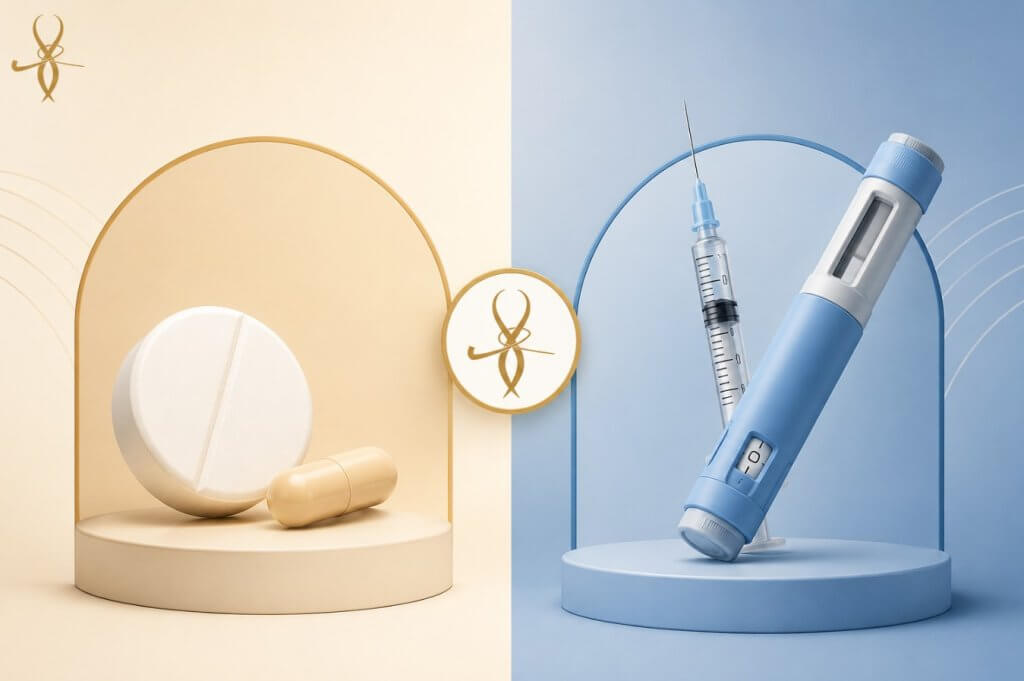
Weight Loss Pills Are Back—but They Are Not the Whole Story
GLP-1 medications have changed the way physicians treat obesity. For many eligible patients, they can provide meaningful appetite control and support significant weight loss.
The growing interest in oral weight loss medication may make treatment more convenient for patients who do not want weekly injections. However, choosing between a pill, a Wegovy® injection, or an endoscopic weight loss procedure involves more than deciding whether you are comfortable with a needle.
Some patients experience side effects. Some regain weight after treatment is discontinued. Others prefer a longer-term approach that does not depend entirely on continuing medication.
Obesity treatment should be personalized—not reduced to a simple choice between a pill and an injection.
Quick Facts About Modern Weight Loss Treatment
Oral GLP-1 Therapy
Modern oral medications may offer GLP-1-based treatment without the need for a weekly injection.
Weekly Wegovy® Injection
Wegovy® is an injectable semaglutide treatment generally administered once per week as prescribed.
Combination Care
Some patients may benefit from medication before or after a procedure as part of a supervised treatment plan.
Procedural Alternatives
ESG and gastric balloons may provide incisionless options for patients seeking treatment beyond medication alone.
Watch: Weight Loss Pills Are Back
In this video, we explain why oral medication is receiving renewed attention—and why pills are only one part of modern, personalized obesity care.
Treatment selection should be based on your medical history, weight-loss goals, medication tolerance, and long-term preferences.
Why Are Weight Loss Pills Making a Comeback?
Older generations of weight loss pills were often associated with limited results, stimulant effects, or difficult side effects. Modern oral GLP-1 medications are different from traditional “diet pills.”
GLP-1-based treatment is designed to influence appetite, fullness, food intake, and metabolic regulation. This is similar to the mechanism used by injectable semaglutide medications, although the formulation, dosing schedule, absorption, and approved uses can differ.
For patients who dislike injections, a pill may feel easier and more familiar. However, convenience alone does not determine whether a treatment is medically appropriate or likely to produce sustainable results.
Weight Loss Pills vs Wegovy® Injections
Both approaches may support appetite control, but they differ in how they are taken and how easily they fit into an individual patient’s routine.
Weight Loss Pill
A tablet taken by mouth according to the specific medication instructions and prescribing plan.
- No injection or needle required
- Usually requires daily adherence
- May have specific fasting or timing instructions
- Can produce gastrointestinal side effects
- Ongoing treatment may be needed to maintain benefits
Wegovy® Injection
Prescription semaglutide administered under the skin once weekly according to a clinician-directed plan.
- Generally administered once per week
- Requires comfort with self-injection
- Dose is typically increased gradually
- Can produce gastrointestinal side effects
- Ongoing treatment may be needed to maintain benefits
| Comparison | Oral GLP-1 Pill | Wegovy® Injection |
|---|---|---|
| How it is taken | Tablet swallowed by mouth | Injection under the skin |
| Typical schedule | Usually once daily, depending on the medication | Once weekly |
| Needle required | No | Yes |
| Primary goal | Reduce appetite and food intake | Reduce appetite and food intake |
| Common tolerability concerns | Nausea, vomiting, diarrhea, constipation, abdominal discomfort, or reduced food tolerance | Nausea, vomiting, diarrhea, constipation, abdominal discomfort, or reduced food tolerance |
| Medication consistency | Daily adherence may be important | Weekly adherence may be easier for some patients |
| Long-term treatment | May be needed to help maintain results | May be needed to help maintain results |
| Lifestyle support | Still recommended | Still recommended |
| Best choice for | Eligible patients who prefer oral treatment and can follow daily dosing instructions | Eligible patients who prefer weekly treatment and are comfortable with injections |
Which Weight Loss Option Fits Your Goals?
Explore medication, ESG, gastric balloon, and combination treatment options through a personalized consultation at EndoSlim Clinic NY.
Dr. Shapsis Explains Weight Loss Pills, Wegovy® and GLP-1 Injections
In this video, Dr. Alexander Shapsis explains the key differences between oral weight loss medication, Wegovy®, and injectable GLP-1 treatment—and why medication may be only one part of a complete obesity treatment plan.
Weight Loss Pills Are Back—but They Are Not the Whole Story
Watch Dr. Shapsis discuss convenience, treatment frequency, side effects, weight regain, and the role of endoscopic weight loss procedures.
Dr. Alexander Shapsis, MD, FACS, explains how oral weight loss pills compare with Wegovy® and other GLP-1 injections at EndoSlim Clinic NY.
Convenient Oral Treatment
A pill avoids injections but may require strict daily dosing, timing, or fasting instructions depending on the medication.
Weekly GLP-1 Injection
Wegovy® and similar injectable treatments may be easier for patients who prefer one scheduled dose each week.
Personalized Obesity Care
Medication, ESG, gastric balloons, and combination care may each have a role depending on the individual patient.
What Happens After You Stop GLP-1 Medication?
Appetite suppression may lessen after medication is discontinued, and some patients regain part of the weight they previously lost.
GLP-1 medications can be effective while a patient is actively taking them. They may reduce hunger, improve satiety, and help patients eat smaller portions.
However, the medication does not permanently remove the biological factors that contributed to obesity. When treatment stops, appetite can increase again, food cravings may return, and maintaining smaller portions can become more difficult.
Stopping Does Not Mean Failure
Weight regain after discontinuation does not necessarily mean the medication failed. Obesity is a chronic condition that may require continued treatment or a different long-term strategy.
A Maintenance Plan Matters
Nutrition, physical activity, follow-up care, behavioral support, and sometimes continued medication or a procedure may be needed to maintain progress.
Why Weight Loss Medication Is Not Right for Everyone
A treatment can be effective in clinical studies and still be difficult for an individual patient to tolerate or maintain.
Both oral and injectable GLP-1 medications can cause digestive side effects. These may be mild and temporary, but they can also interfere with hydration, nutrition, work, exercise, or daily comfort.
Other patients may have medical contraindications, limited insurance coverage, high out-of-pocket costs, difficulty following daily pill instructions, or discomfort with self-injection.
Some simply prefer a treatment strategy that does not rely entirely on taking medication indefinitely.
When an Incisionless Weight Loss Procedure May Be Considered
Endoscopic treatments can provide another option for patients who do not tolerate medication, want additional weight loss, or prefer a procedure-based approach.
Endoscopic weight loss procedures are performed through the mouth using a flexible endoscope. They do not require the same abdominal incisions used in traditional bariatric surgery.
These procedures are not automatically better than medication, and medication is not automatically better than a procedure. The appropriate choice depends on the patient’s BMI, health history, previous treatment response, goals, and long-term preferences.
Can Medication and an Endoscopic Procedure Be Used Together?
For selected patients, obesity treatment may involve more than one tool rather than a choice of medication or procedure alone.
A clinician may consider GLP-1 medication before a procedure, after a procedure, or later if weight loss slows or weight regain begins. The timing and treatment sequence should be individualized.
A combination plan may help address different components of obesity treatment. An endoscopic procedure can support portion control through a physical change inside the stomach, while medication may help reduce hunger and food cravings.
Combination care is not necessary for every patient. It should only be considered after reviewing potential benefits, risks, side effects, costs, and the patient’s medical history.
There Is No Single Best Weight Loss Treatment for Everyone
Weight loss pills, Wegovy® injections, Endoscopic Sleeve Gastroplasty, and gastric balloons are different tools. Each option has its own benefits, limitations, side effects, and long-term considerations.
One patient may prefer the convenience of a daily pill. Another may find a weekly injection easier to manage. Someone who has experienced medication side effects or weight regain may want to explore an incisionless procedure.
At EndoSlim Clinic NY, treatment recommendations are based on the individual patient—not on a single medication, device, or procedure.
Which Weight Loss Option May Fit Your Goals?
These examples can help explain how treatment preferences may differ. A medical evaluation is still necessary before choosing any medication or procedure.
An Oral Medication May Appeal to You If:
- You strongly prefer to avoid injections
- You can follow a consistent daily medication routine
- You are comfortable with ongoing medical treatment
- You understand that dosing instructions may be specific
- You are willing to attend follow-up appointments
A Wegovy® Injection May Appeal to You If:
- You prefer a once-weekly treatment schedule
- You are comfortable administering an injection
- You can follow a clinician-directed dose-escalation plan
- You are prepared for possible gastrointestinal effects
- You accept that long-term treatment may be recommended
ESG May Be Worth Exploring If:
- You want an incisionless procedural option
- You have struggled to maintain weight loss with medication alone
- You want physical support for smaller portion sizes
- You prefer to avoid traditional bariatric surgery
- You are committed to nutrition and long-term follow-up
A Combination Plan May Be Considered If:
- One treatment has not produced sufficient progress
- Weight loss has slowed after an initial response
- Appetite control remains difficult after a procedure
- Your clinician believes multiple tools may be beneficial
- The potential benefits justify the added cost and complexity
Weight Loss Pills vs Wegovy® vs ESG vs Gastric Balloon
This chart provides a general comparison of common obesity treatment options. The details can vary by medication, procedure, health history, and individual treatment plan.
| Feature | Weight Loss Pill | Wegovy® | ESG | Gastric Balloon |
|---|---|---|---|---|
| Treatment type | Prescription oral medication | Prescription GLP-1 injection | Incisionless endoscopic procedure | Temporary endoscopic device |
| How it is administered | Swallowed by mouth | Injected under the skin | Performed through the mouth using an endoscope | Placed inside the stomach |
| Typical frequency | Usually daily, depending on the medication | Once weekly | One procedure with structured follow-up | Temporary treatment period |
| External incisions | No | No | No | No |
| Needle required | No | Yes | No self-injection | No self-injection |
| Physical stomach-volume support | No | No | Yes, through internal sutures | Yes, while the balloon remains in place |
| Medication continuation | May be recommended long term | May be recommended long term | Not inherently dependent on ongoing medication | Not inherently dependent on ongoing medication |
| Common early concerns | Digestive side effects and daily adherence | Digestive side effects and injections | Nausea, cramping, dietary progression and recovery | Nausea, pressure, food tolerance and adjustment |
| Recovery period | No procedural recovery | No procedural recovery | Usually several days of initial recovery | Initial adjustment period varies |
| Long-term success depends on | Adherence, nutrition, activity and follow-up | Adherence, nutrition, activity and follow-up | Nutrition, follow-up, activity and behavior change | Nutrition, follow-up, activity and behavior change |
This chart is educational and does not establish which treatment is safest or most appropriate for a specific patient.
How We Select a Personalized Weight Loss Plan
Review Your Health History
We review your current weight, BMI, medical conditions, medications, previous procedures, and earlier weight loss attempts.
Discuss Your Previous Treatment Experience
Tell us what worked, what did not work, whether you experienced side effects, and whether weight returned after stopping treatment.
Compare Medication and Procedural Options
We explain the differences between oral medication, weekly injections, ESG, gastric balloons, and possible combination approaches.
Create a Long-Term Strategy
Your plan may include nutrition guidance, behavioral changes, activity goals, medical monitoring, and structured follow-up after treatment begins.
Related Endoscopic Weight Loss Resources
Learn how ESG reduces stomach volume without traditional abdominal weight loss surgery.
Recovery What Actually Happens After ESG?Review the first days, dietary progression, appetite changes, and long-term recovery.
Side Effects ESG Side Effects and Recovery TimelineLearn about nausea, cramping, discomfort, and symptom management after the procedure.
How ESG Works How ESG Reduces Stomach VolumeSee how internal sutures reshape the stomach and support smaller portion sizes.
Weight Loss Goals How to Lose 60 Pounds SafelyExplore medically supervised strategies for patients with a more substantial weight loss goal.
Realistic Expectations Can You Lose 15 Pounds in a Month?Understand what affects early weight loss and why individual results differ.
Frequently Asked Questions
Are weight loss pills better than Wegovy® injections?
Not necessarily. An oral medication may be more comfortable for someone who wants to avoid injections, while a weekly injection may be easier for a patient who does not want to remember a daily pill. Medical history, availability, side effects, adherence, and treatment goals all matter.
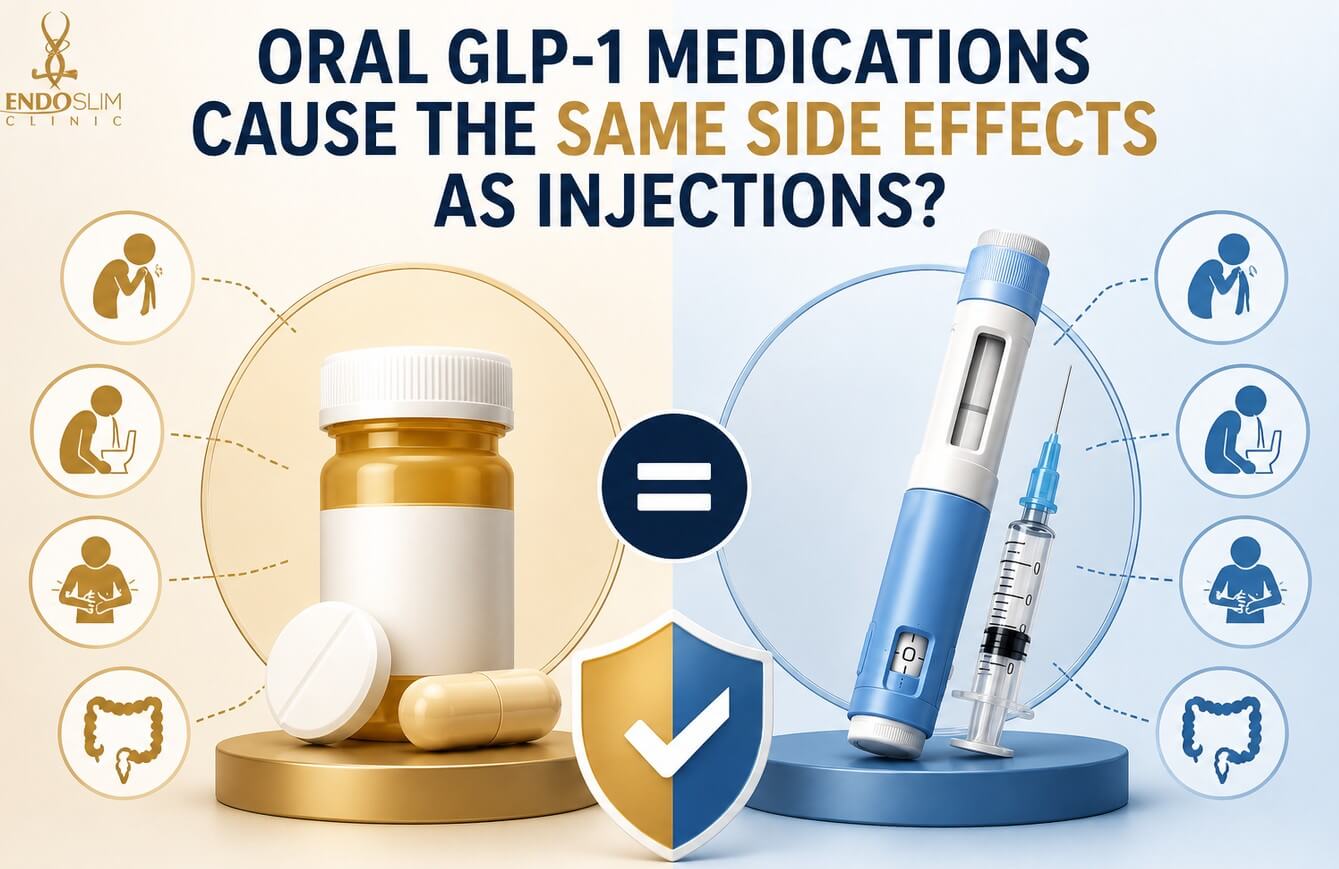
Do oral GLP-1 medications cause the same side effects as injections?
Both oral and injectable GLP-1 treatments may cause nausea, vomiting, constipation, diarrhea, abdominal discomfort, and reduced food tolerance. The intensity and timing of symptoms can differ between patients and products.
Will I regain weight after stopping a weight loss pill or Wegovy®?
Some patients regain part of the weight after treatment ends because appetite and hunger signals can return. A structured maintenance plan may include nutrition, exercise, behavioral support, continued medication, or another medically appropriate treatment.
Is ESG better than taking weight loss medication?
ESG and medication work differently. Medication primarily affects appetite and metabolic signaling, while ESG physically reduces the stomach’s functional volume using internal sutures. One is not automatically better than the other for every patient.
Can I use a GLP-1 medication after ESG?
A clinician may consider medication after ESG for selected patients, particularly when appetite control remains difficult, weight loss slows, or weight regain occurs. Combination treatment is not required for every patient and should be individualized.
Can I switch from Wegovy® injections to a weight loss pill?
A change may be possible for some patients, but it should not be done without medical guidance. The clinician must review the specific medications, dosing, treatment response, side effects, and relevant health conditions.
Who may not be a candidate for GLP-1 treatment?
Eligibility depends on the medication and the patient’s health history. Pregnancy, certain digestive disorders, medication interactions, and other medical factors may affect treatment selection. A qualified clinician must review individual risks.
How do I know which treatment is right for me?
The most appropriate option can be determined only after reviewing your BMI, health history, previous weight loss attempts, medication tolerance, treatment preferences, and long-term goals.
Explore More Than One Path to Weight Loss
Schedule a consultation with Dr. Alexander Shapsis and the EndoSlim Clinic NY team to compare weight loss pills, Wegovy®, GLP-1 injections, ESG, gastric balloons, and combination treatment options.



-
Mon-Friday: 08:30 - 6:00Saturday: ClosedSaturday: Closed