
How Much Weight Can You Lose in 6 Months? A Realistic Timeline in Pounds
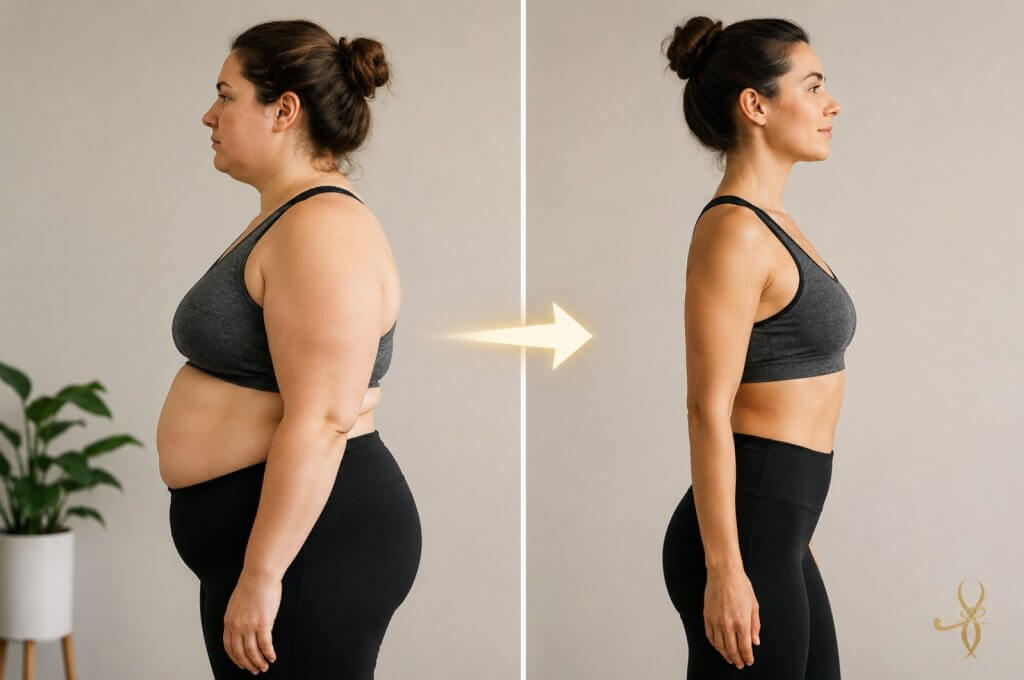
How Many Pounds Could You Realistically Lose in Six Months?
Six months is long enough for many people to make noticeable progress, improve their daily habits, reduce their waist size, and begin seeing meaningful changes in how they feel.
But patients rarely want to hear only percentages. They want to know what those results may look like in actual pounds.
Could you lose 20 pounds? Thirty pounds? Fifty pounds?
The answer depends on your starting weight, medical history, nutrition, activity, metabolism, treatment plan, and how consistently you can follow that plan.
Six-month weight loss should be measured by sustainable progress, not by chasing the fastest possible number on the scale.
Why the Six-Month Range Is So Broad
A patient starting at 300 pounds may lose significantly more pounds than a patient beginning at 180 pounds, even when both lose a similar percentage of their starting weight.
The type of treatment also matters. Lifestyle changes alone, prescription medication, a gastric balloon, and ESG do not produce identical timelines or results.
The numbers below help translate percentage-based weight loss into pounds so patients can better understand what different levels of progress may look like.
What Weight Loss Percentages Look Like in Pounds
These examples show how losing 5%, 10%, 15%, or 20% of starting body weight translates into pounds.
| Starting Weight | 5% Loss | 10% Loss | 15% Loss | 20% Loss |
|---|---|---|---|---|
| 180 lbs | 9 lbs | 18 lbs | 27 lbs | 36 lbs |
| 200 lbs | 10 lbs | 20 lbs | 30 lbs | 40 lbs |
| 225 lbs | 11 lbs | 23 lbs | 34 lbs | 45 lbs |
| 250 lbs | 13 lbs | 25 lbs | 38 lbs | 50 lbs |
| 275 lbs | 14 lbs | 28 lbs | 41 lbs | 55 lbs |
| 300 lbs | 15 lbs | 30 lbs | 45 lbs | 60 lbs |
Illustrative examples only: These numbers show mathematical percentages of starting weight. They do not predict how much a specific patient will lose or guarantee that any treatment will produce a particular result.
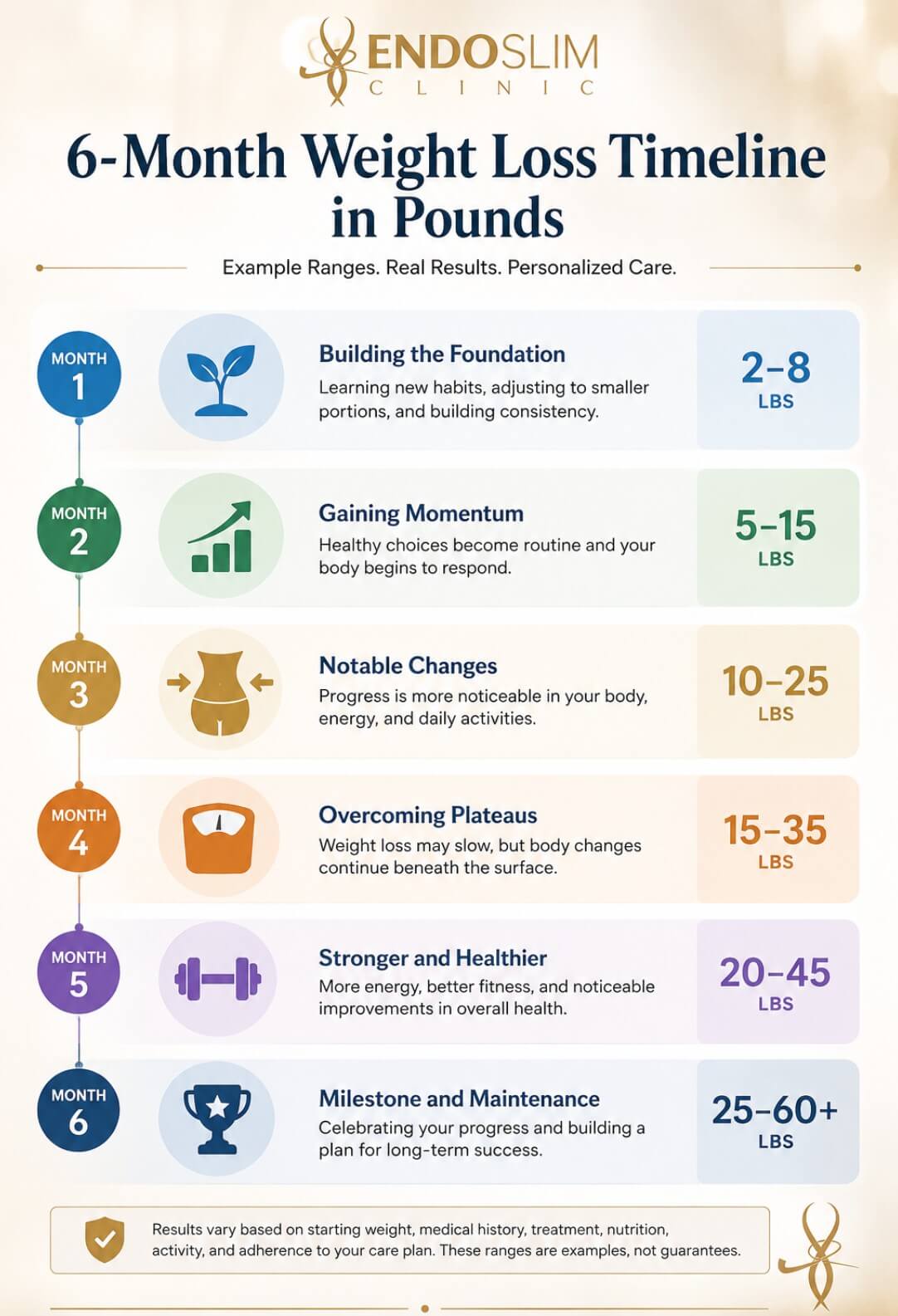
A Practical Six-Month Weight Loss Timeline in Pounds
The following ranges are broad examples designed to help patients understand how progress may build over time. Some people lose less, some lose more, and temporary plateaus are common.
1
Building the Foundation
The first month is often about learning how to eat differently, manage portions, improve hydration, and establish a repeatable routine.
What You May Notice
Reduced bloating, early changes in appetite, smaller portions, improved food awareness, and initial movement on the scale.
Your Main Focus
Follow your medical plan, drink enough fluids, prioritize protein and nutrient-rich foods, and avoid judging the entire journey by the first few weeks.
2
Your Routine Begins to Feel More Natural
Healthy choices may require less effort, and many patients begin feeling more confident about their ability to continue.
What You May Notice
Clothes may begin fitting differently, hunger may feel easier to manage, and walking or daily movement may become more comfortable.
Your Main Focus
Continue following the plan instead of becoming overly restrictive. Sustainable progress usually comes from consistency, not extreme dieting.
3
Changes Often Become More Noticeable
By the third month, progress may be visible in photographs, clothing, waist size, mobility, and daily energy.
What You May Notice
A smaller waist, improved stamina, healthier meal patterns, more confidence, and a greater sense of control around food.
Your Main Focus
Review progress with your care team. It may be time to adjust activity, nutrition, medication, or follow-up depending on tolerability and response.
4
Progress May Temporarily Slow
Weight loss rarely follows a perfectly straight line. A slower month does not automatically mean that treatment has stopped working.
What You May Notice
The scale may move more slowly while waist size, strength, food tolerance, and fitness continue changing.
Your Main Focus
Review portion sizes, protein intake, activity, sleep, stress, and hydration before assuming that more aggressive treatment is necessary.
5
Health Improvements May Become More Important
At this stage, patients often recognize that success includes more than the total number of pounds lost.
What You May Notice
Better mobility, improved endurance, reduced waist circumference, easier daily movement, and increased confidence.
Your Main Focus
Continue protecting muscle through adequate nutrition and appropriate resistance exercise rather than focusing only on making the scale drop faster.
6
Six Months Is a Milestone—not the Finish Line
This is an important time to evaluate what worked, what remains difficult, and how to protect your progress long term.
What You May Notice
Major changes in clothing size, waist circumference, mobility, confidence, appetite patterns, and overall daily routine.
Your Main Focus
Create a maintenance strategy. Depending on your treatment, this may involve continued medication, structured follow-up, nutrition support, or ongoing care after an endoscopic procedure.
What Determines How Many Pounds You Can Lose in Six Months?
Two people can follow similar plans and still lose very different amounts of weight.
Weight loss is influenced by more than motivation. Starting weight, age, hormones, medical conditions, medications, metabolism, muscle mass, sleep, stress, nutrition, activity, and treatment type can all affect the pace of progress.
Someone starting at 300 pounds may lose more pounds than someone starting at 180 pounds, even if both achieve a similar percentage reduction in body weight.
Starting Weight
People with a higher starting weight may see a larger number of pounds lost during the same six-month period.
Metabolism and Muscle Mass
Lean muscle supports energy use, while age, inactivity, and some health conditions may affect metabolic rate.
Hormones and Medical Conditions
Thyroid disorders, insulin resistance, menopause, sleep apnea, and other conditions may influence weight and appetite.
Medications
Some medications may promote weight gain, while prescribed obesity treatments may support appetite control and weight reduction.
Food Choices and Portions
Treatment tools can help, but regular food choices, meal size, protein intake, and liquid calories still influence results.
Consistency Over Time
A sustainable routine followed for six months is usually more effective than an extreme plan that lasts only a few weeks.
How to Improve Your Chances of Meaningful Six-Month Weight Loss
Successful weight loss usually comes from a realistic plan that can be followed consistently—not from trying to be perfect every day.
Begin With a Professional Medical Evaluation
A consultation can help identify medical conditions, medications, eating patterns, sleep problems, or previous treatment experiences that may affect your progress.
It can also help determine whether lifestyle care, prescription medication, a gastric balloon, ESG, or a combination approach may be appropriate.
Set a Range Instead of One Perfect Number
A goal such as losing 30–40 pounds can be more practical than deciding that anything below exactly 40 pounds is a failure.
A range allows for differences in starting weight, monthly plateaus, travel, illness, stress, and normal fluctuations.
Build Eating Habits You Can Continue
Very restrictive diets may produce early scale changes, but they are often difficult to maintain.
A more practical approach usually includes smaller portions, adequate protein, vegetables, fruit, whole foods, mindful eating, and fewer high-calorie drinks.
Protect Muscle While Losing Weight
Weight loss should not come only from muscle. Adequate nutrition and appropriate resistance exercise can help preserve lean tissue during treatment.
Walking and cardiovascular exercise support activity, while strength training can help maintain function, mobility, and metabolic health.
Expect Imperfect Weeks and Temporary Plateaus
Six months will rarely go exactly as planned. Holidays, travel, work stress, poor sleep, illness, and changing schedules can interrupt progress.
One difficult day does not erase months of work. Resume your routine, review what happened, and continue.
Review Progress and Adjust the Plan
If weight loss has slowed, the answer is not always to eat dramatically less or increase medication without guidance.
Your care team may review portions, protein, hydration, activity, sleep, bowel habits, side effects, medication response, or whether another treatment option should be considered.
How to Track Progress Without Becoming Obsessed With Daily Weight
Weight can fluctuate from hydration, sodium, digestion, hormones, and normal day-to-day changes.
Daily weighing may be helpful for some people and stressful for others. The most useful approach is one you can follow without allowing every small change to determine how you feel about your progress.
Track weight under similar conditions and pay more attention to the trend over several weeks than to one individual reading.
Waist circumference, clothing fit, photographs, and mobility may show progress even during a slower month.
Energy, sleep, blood pressure, blood sugar, stamina, joint comfort, and confidence are also meaningful outcomes.
Weight Loss Options That May Affect Six-Month Results
No treatment produces the same result for every patient. Eligibility, side effects, costs, medical history, and personal preferences should all be considered.
How Different Weight Loss Approaches May Feel Over Six Months
This comparison describes general treatment differences. It does not predict a specific number of pounds for an individual patient.
| Feature | Lifestyle Care | Medication | Allurion | ESG |
|---|---|---|---|---|
| Main tool | Food, activity, sleep, and behavior changes | Appetite and metabolic support | Temporary gastric balloon | Internal stomach sutures |
| Daily commitment | High | Medication plus lifestyle care | Nutrition and follow-up | Nutrition and follow-up |
| Procedure required | No | No | Swallowable capsule placement process | Endoscopic procedure |
| Physical portion support | No direct stomach change | No direct stomach change | Yes, while the balloon is present | Yes, through reduced functional stomach volume |
| Common early focus | Building habits and consistency | Dosing, appetite changes, and side effects | Adjustment, hydration, and food tolerance | Recovery and dietary progression |
| At six months | Review progress and sustainability | Review response and maintenance plan | Transition toward long-term maintenance | Continue long-term follow-up and habit development |
The treatment that produces the largest number on the scale is not automatically the best option. Safety, tolerability, medical eligibility, nutrition, muscle preservation, and long-term maintenance also matter.

Continue Reading
Lose Up to 20% of Your Body Weight Without Traditional Surgery
Learn how Endoscopic Sleeve Gastroplasty (ESG) helps eligible patients eat smaller portions without traditional bariatric surgery.
Read MoreWeight Loss Pills vs. Injections
Compare oral weight loss medications with GLP-1 injections including Wegovy® and discover which option may better fit your lifestyle.
Compare TreatmentsAvoid Weight Gain After Zepbound®
Learn why some patients regain weight after stopping medication and how a maintenance strategy may help protect your progress.
Read GuideAllurion Smart Capsule
Discover how the swallowable gastric balloon may help eligible patients lose weight without surgery or endoscopy.
Learn MoreFrequently Asked Questions
Can I lose 50 pounds in six months?
How much weight can I realistically lose in six months?
Is losing weight too quickly unhealthy?
What if my weight loss stops after three or four months?
Can I combine medication with ESG or the Allurion Smart Capsule?
How do I keep the weight off after six months?
Ready to Start Your Weight Loss Journey?
Whether you’re hoping to lose 20 pounds or significantly more, our team can help determine the most appropriate treatment based on your health, medical history, and long-term goals.
Schedule Your Consultation






-
Mon-Friday: 08:30 - 6:00Saturday: ClosedSaturday: Closed