
Why Your Body Fights Weight Loss: Hunger, Metabolism & Weight Regain Explained
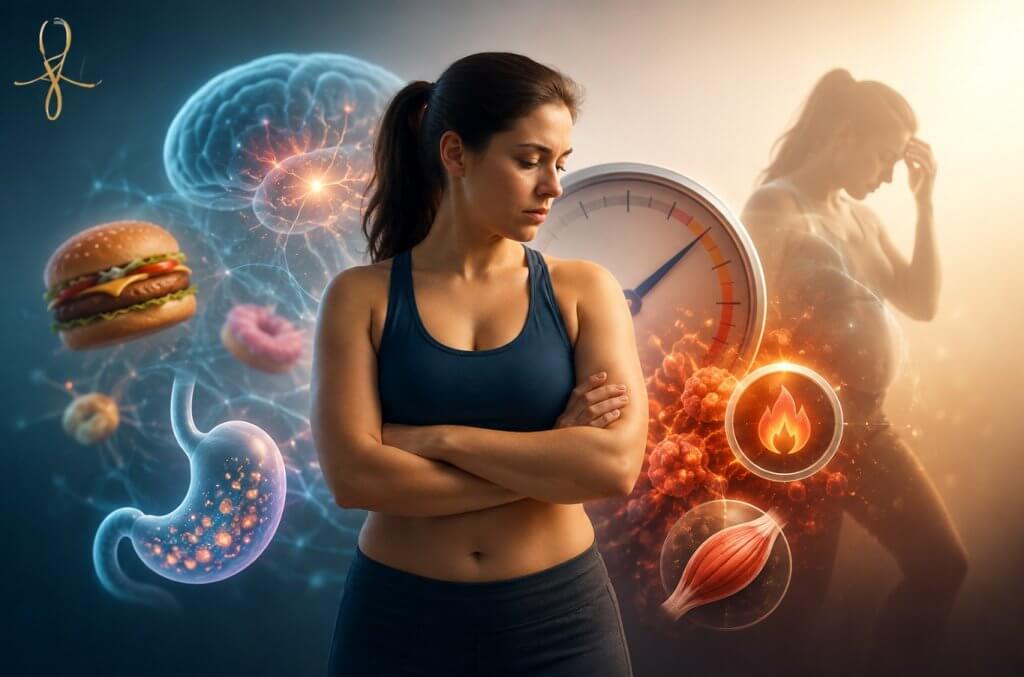
Why Your Body Can Fight Weight Loss
Losing weight can feel straightforward at first. You reduce portions, improve your food choices, move more, and the scale begins to change. Then hunger increases, progress slows, or weight starts creeping back.
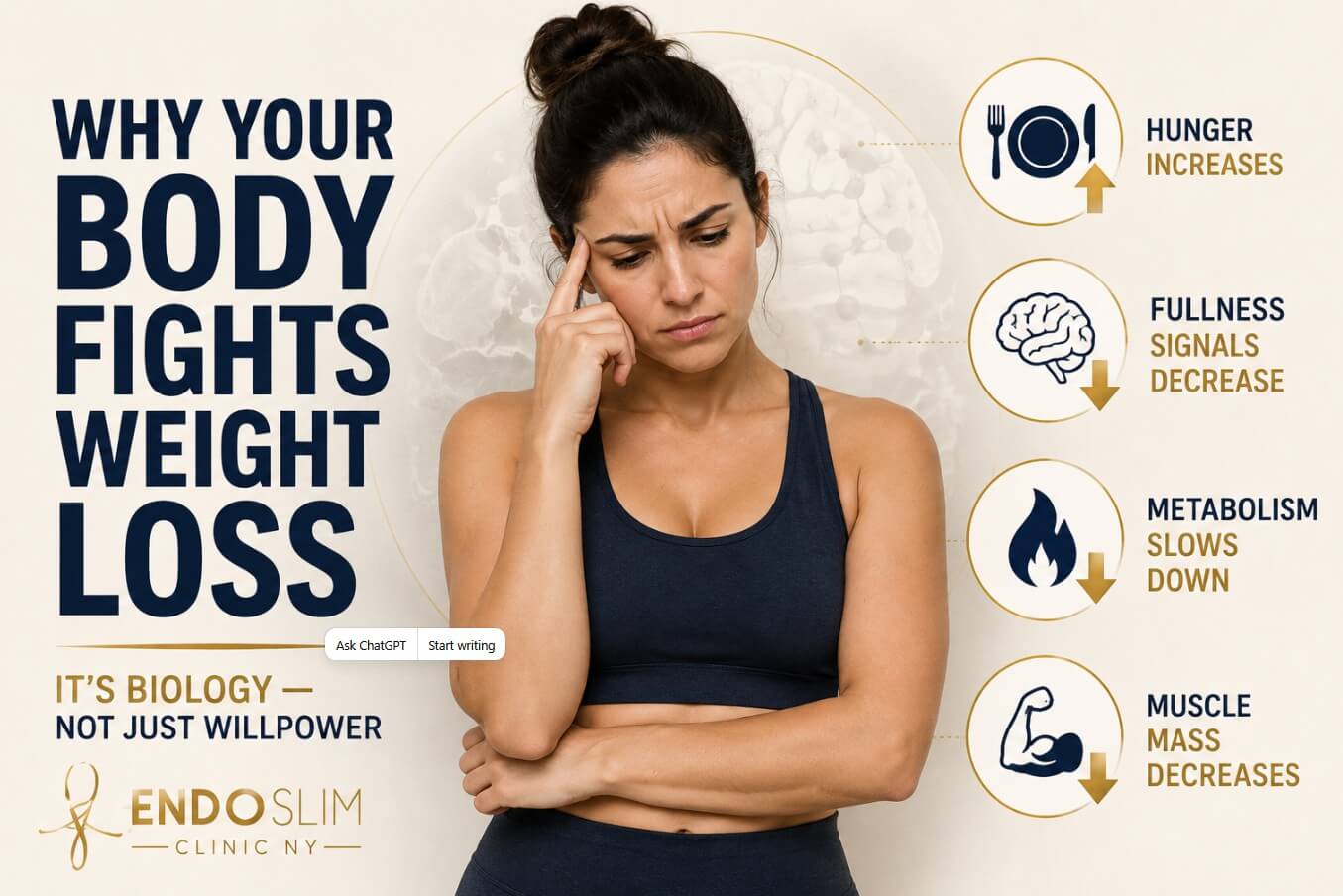
Many patients interpret that experience as a lack of discipline. But the body can respond to weight loss by increasing hunger, weakening fullness signals, and reducing the amount of energy it uses.
That is one reason obesity is better understood as a complex, chronic disease—not simply a problem of willpower.
Watch Dr. Shapsis Explain Why the Body Resists Weight Loss
Dr. Alexander Shapsis explains why hunger, fullness, metabolism, and muscle mass can change as body weight decreases.
Why maintaining weight loss can be difficult—and why treatment may need to address more than calorie intake alone.
Your Body Does Not Know You Are “On a Diet”
From a biological standpoint, losing stored energy can trigger systems designed to protect body weight.
Your body regulates appetite, energy storage, and energy expenditure through complex biological systems. When body weight falls, those systems can respond in ways that make continued weight loss more difficult.
This does not mean weight loss is impossible. It means simply telling someone to “eat less and move more” ignores many of the forces involved in long-term weight regulation.
Hunger Can Increase
As weight decreases, appetite signals may become stronger. Patients may think about food more often or feel hungrier between meals.
Fullness Can Feel Weaker
The same meal may not feel as satisfying as it did earlier in the weight loss process, making smaller portions harder to maintain.
Your Body May Use Less Energy
A smaller body naturally requires fewer calories, and metabolic adaptation can further reduce total energy expenditure.
Muscle Mass Matters
If weight loss includes too much lean tissue, strength and metabolic health may suffer. Preserving muscle is an important part of a well-designed plan.
Why Hunger Often Gets Stronger During Weight Loss
Early in a weight loss program, motivation may be high and appetite may feel manageable. As weight decreases, however, biological signals involved in appetite regulation can change.
You may think about food more frequently. Portions that once felt satisfying may leave you wanting more. Cravings may feel harder to ignore.
That does not automatically mean the diet stopped working. The biological pressure to eat may have increased.
Fullness Signals Matter Just as Much as Hunger
Satiety is the internal signal that tells you that you have eaten enough. When that signal becomes weaker, maintaining smaller portions can require much more effort.
This is why modern obesity treatment increasingly focuses on appetite regulation, satiety, and portion control—not simply calorie restriction.
Your Metabolism Is Adapting—Not Necessarily “Broken”
When you weigh less, your body naturally needs less energy to move and maintain itself. That alone can reduce the calorie deficit that previously produced steady weight loss.
The body can also become more energy-efficient during weight loss. The same eating and activity routine that worked at a higher weight may eventually produce slower progress.
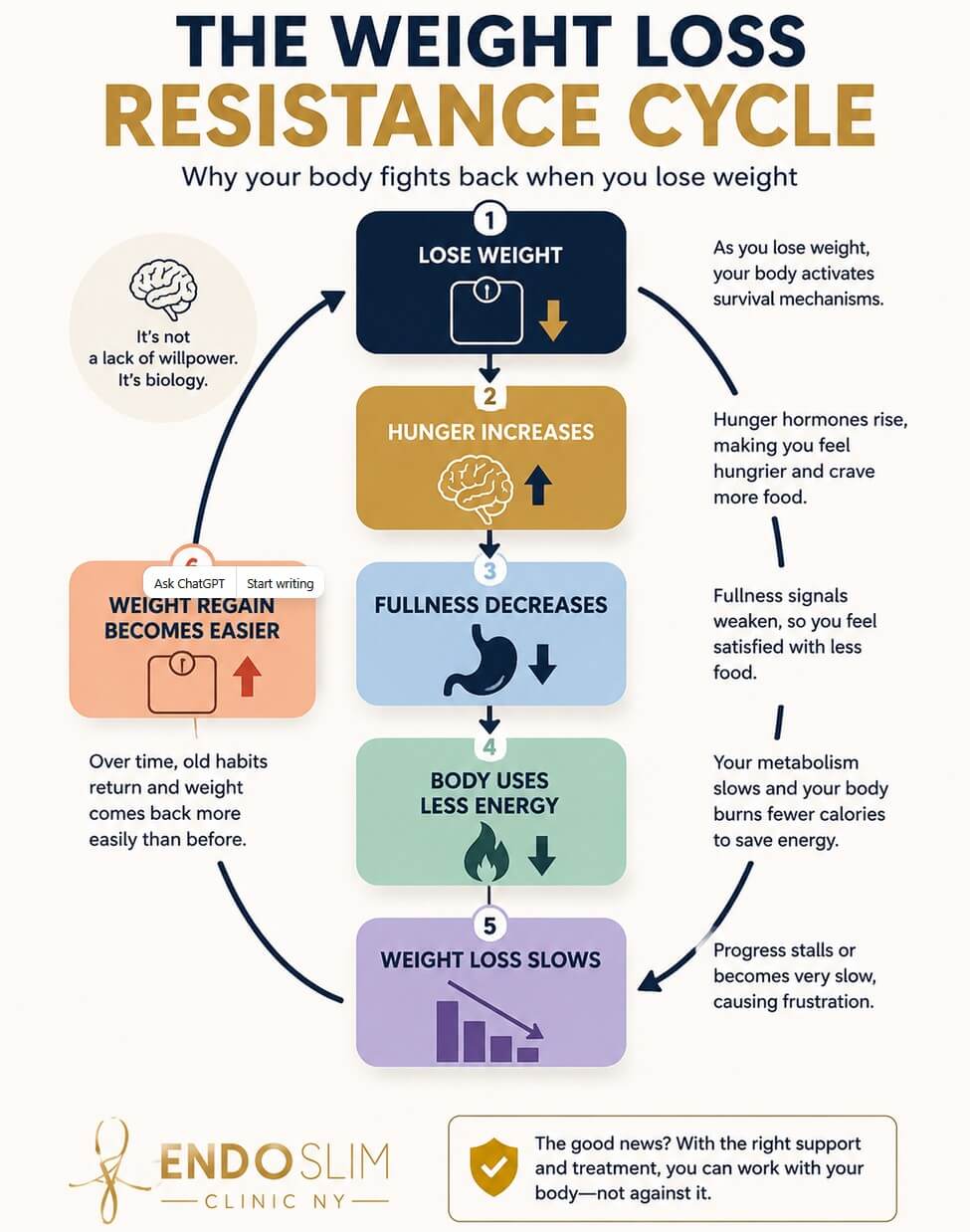
The Weight Loss Resistance Cycle
Weight loss can trigger a sequence of changes that gradually make continued progress harder and regain easier.
You Lose Weight
Your body becomes smaller and has less stored energy than before.
Hunger Increases
Appetite signals may become stronger, making food more difficult to ignore.
Fullness Decreases
You may need more effort to feel satisfied with the same portions.
Your Body Uses Less Energy
Lower body weight and metabolic adaptation can reduce total energy expenditure.
Weight Loss Slows
The calorie deficit that worked earlier becomes smaller, and a plateau may appear.
Why Weight Regain Is So Common
Losing weight and maintaining weight loss are not exactly the same challenge. Once a goal is reached, patients may stop structured follow-up, change medications, become less active, or gradually return to larger portions.
Meanwhile, appetite and other biological pressures may still be present. That is why I encourage patients to think about maintenance from the beginning, not only after they reach a goal weight.
Obesity Is More Complicated Than Willpower
Body weight can be influenced by genetics, appetite signaling, hormones, sleep, stress, medications, metabolic health, physical activity, muscle mass, medical conditions, pregnancy history, menopause, previous weight loss attempts, and behavior.
Two patients can follow similar plans and respond differently. Two patients can use the same medication and lose different amounts. That is why treatment should be individualized.
Body weight also needs to be interpreted in context. For women, age-related changes in hormones, muscle mass, and fat distribution can affect what BMI means for overall health. Read our guide to healthy BMI for women by age.
For patients living with severe obesity, the biological challenges of weight management may be even more significant. See how we discuss treatment options for BMI 48 and Class 3 obesity.
Why Can Weight Be So Difficult to Lose After Pregnancy?
Pregnancy and the postpartum period can change much more than the number on the scale.
Hormonal changes, sleep disruption, stress, changes in physical activity, appetite, muscle mass, and a completely different daily routine can all influence postpartum weight.
That is why simply telling a woman to “eat less” after pregnancy can miss much of what is actually happening.
We discuss this in more detail in Can’t Lose Weight After Pregnancy? Why Your Body May Be Fighting Back.
What Can You Do When Your Body Pushes Back?
The answer is not always to eat dramatically less. Modern obesity treatment gives us several tools that can be matched to the patient.
Protecting Muscle While Losing Weight
When people say they want to lose weight, what they usually mean is that they want to lose excess body fat—not strength and lean tissue.
Adequate protein, appropriate resistance training, regular activity, and avoiding unnecessarily aggressive calorie restriction can all matter.
The goal is not just to become lighter. It is to become healthier.
What Happens After You Reach Your Goal Weight?
If you lose 30, 40, or 60 pounds, the strategy should not suddenly disappear. Maintenance may include continued attention to portions, protein, activity, strength training, sleep, appetite, body weight, and waist circumference.
For some patients, ongoing medical treatment may also be appropriate. The goal is to identify regain early rather than waiting until a substantial amount has returned.
You Did Not Necessarily “Fail” Your Diet
If you have lost weight before and regained it, that history may tell us something useful about the type of support you need.
Maybe hunger became overwhelming. Maybe the plan was too restrictive. Maybe medication helped but there was no maintenance strategy after stopping. Maybe you need a different treatment tool.
Those are clinical questions—not character judgments.

Ready to Understand What Is Making Weight Loss Difficult?
At EndoSlim Clinic NY, Dr. Alexander Shapsis and our team can review your weight history, previous treatment attempts, medical conditions, appetite, goals, and lifestyle to determine which approach may be appropriate for you.
Schedule a Consultation






-
Mon-Friday: 08:30 - 6:00Saturday: ClosedSaturday: Closed