
What Is a Healthy BMI for Women at Every Age?

A Normal BMI Does Not Change With Age—but Your Body Does
Many women notice that maintaining the same weight becomes more difficult after pregnancy, during perimenopause, after menopause, or simply as they grow older.
The number on the scale may increase even when eating habits have not changed very much. Muscle mass may gradually decline, body fat distribution can shift, and hormonal changes may make abdominal weight gain more noticeable.
This often leads to an important question: Does a normal BMI for women change with age?
The official adult BMI categories remain the same at every age, but BMI should be interpreted together with body composition, waist size, strength, medical history, and metabolic health.
Quick Facts About BMI for Women
Healthy BMI Starts at 18.5
A BMI below 18.5 is classified as underweight for most nonpregnant adults.
Healthy BMI Ends at 24.9
A BMI from 18.5 through 24.9 is classified as a healthy adult weight range.
The Range Does Not Change
The standard adult BMI categories remain the same throughout adulthood.
BMI Is Only One Measurement
Waist circumference, muscle mass, fat distribution, medical history, and laboratory results also matter.
What Is Body Mass Index?
Body Mass Index, usually shortened to BMI, compares a person’s weight with their height.
Healthcare professionals commonly use BMI as an initial screening tool when assessing weight-related health risks. It provides a standardized way to group adults into underweight, healthy-weight, overweight, and obesity categories.
BMI does not directly measure body fat. It also cannot distinguish between muscle, bone, water, and fat tissue. For that reason, it should be considered a starting point rather than a complete assessment of a woman’s health.
Two women can have the same height, weight, and BMI while having very different muscle mass, waist measurements, fitness levels, and metabolic risk.
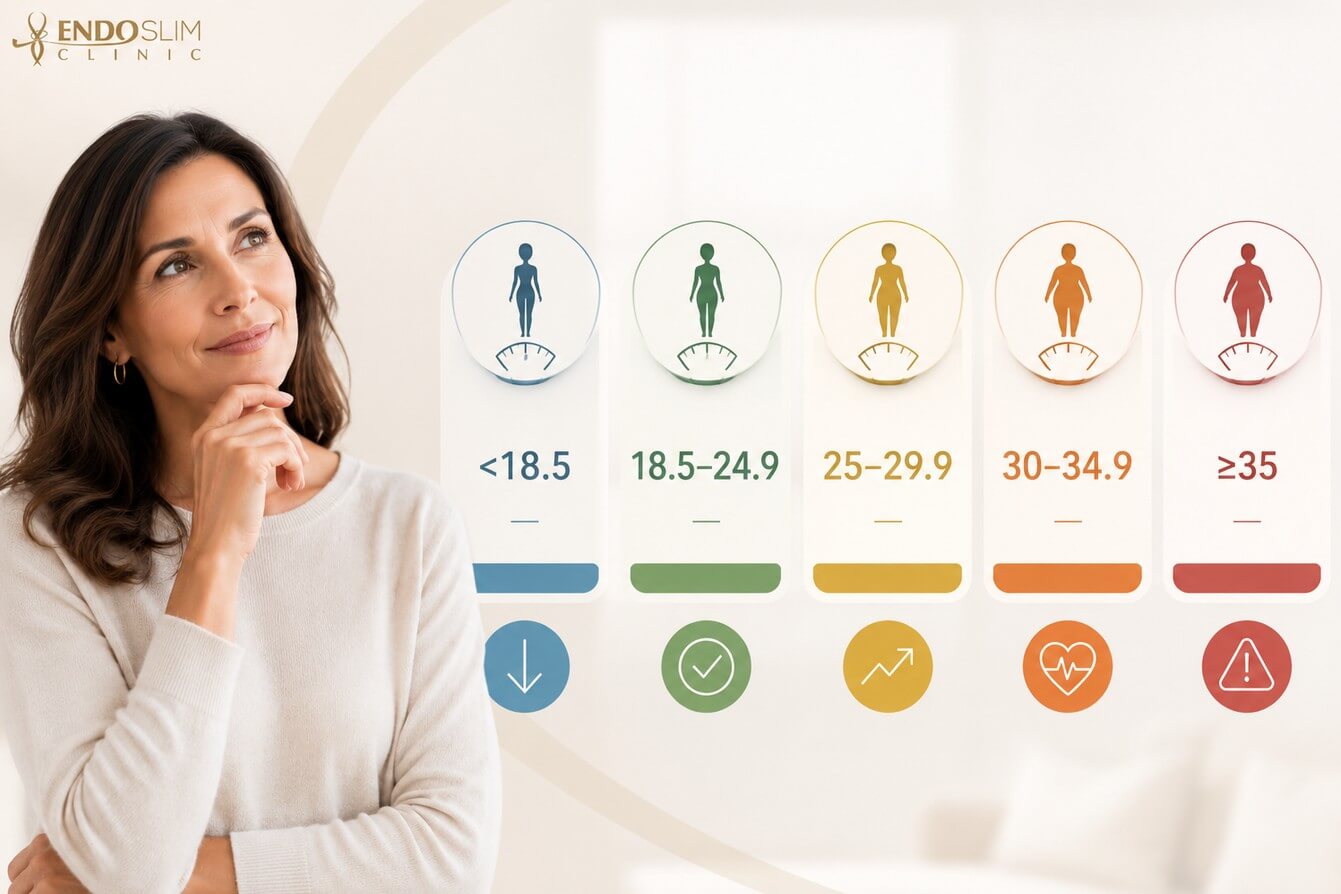
BMI Categories for Adult Women
These categories generally apply to nonpregnant adults age 20 and older. They are screening classifications and do not diagnose a disease or determine health by themselves.
| BMI Range | Weight Category | What It Means |
|---|---|---|
| Below 18.5 | Underweight | A medical evaluation may be appropriate, particularly when low weight is unintentional. |
| 18.5–24.9 | Healthy Weight | This is the standard healthy BMI range for most adult women. |
| 25.0–29.9 | Overweight | Additional factors such as waist size and metabolic health help determine individual risk. |
| 30.0–34.9 | Class 1 Obesity | Weight-related health risks may be increased, depending on the individual’s overall health. |
| 35.0–39.9 | Class 2 Obesity | A comprehensive medical assessment may help identify appropriate treatment options. |
| 40.0 or Higher | Class 3 Obesity | This category is associated with a higher likelihood of weight-related medical concerns. |
Important: Pregnancy, athletic muscle mass, significant fluid retention, frailty, and certain medical conditions can affect how BMI should be interpreted.
Does a Normal BMI for Women Change With Age?
The Official Adult BMI Range Stays the Same
A BMI of 18.5–24.9 remains the standard healthy-weight range whether a woman is 25, 45, 65, or older. What changes with age is body composition. Women may gradually lose muscle, gain fat, or carry more fat around the abdomen even when BMI changes very little.
How BMI Should Be Viewed at Different Ages
The numerical categories stay consistent, but health priorities and the clinical context can change over time.
30s
Women in Their 20s and 30s
BMI can be a useful starting point, but pregnancy, postpartum changes, athletic training, and individual body composition still matter.
Common Considerations
Pregnancy history, hormonal conditions, sleep, activity, nutrition, and muscle development can all influence weight.
Clinical Focus
Providers may review blood pressure, glucose, cholesterol, menstrual history, family history, and waist measurement.
50s
Women in Their 40s and 50s
Hormonal changes may be accompanied by shifts in body composition and greater fat accumulation around the abdomen.
Common Considerations
Sleep disruption, lower activity, loss of lean tissue, menopause symptoms, and changing fat distribution may affect weight management.
Clinical Focus
Waist circumference, blood sugar, cholesterol, blood pressure, muscle strength, and menopause-related changes may become more important than BMI alone.
Women Age 60 and Older
BMI remains useful, but preserving muscle, strength, mobility, bone health, and nutrition becomes increasingly important.
Common Considerations
Older adults may lose muscle even when body weight remains stable. Unintentional weight loss can also require medical evaluation.
Clinical Focus
Strength, balance, mobility, nutrition, bone health, independence, and chronic medical conditions may carry greater importance.
Why BMI Is Not the Whole Story for Women
BMI can help identify general weight categories, but it does not show where body fat is stored, how much muscle a woman has, or whether she has an underlying metabolic condition.
BMI is valuable because it is quick, inexpensive, and easy to compare across large groups of people. However, an individual woman’s health cannot be fully understood from height and weight alone.
A woman with substantial muscle mass may have a BMI in the overweight range even though her body fat level is healthy. Another woman may have a BMI within the normal range while carrying more abdominal fat, having low muscle mass, or experiencing high blood sugar or elevated cholesterol.
BMI Does Not Measure Body Fat
It cannot distinguish fat tissue from muscle, bone, water, or other lean tissue.
BMI Does Not Show Fat Distribution
Abdominal fat may carry different health implications than fat stored around the hips or thighs.
BMI Does Not Measure Fitness
Cardiovascular fitness, strength, mobility, and activity level are not reflected in a BMI number.
BMI Does Not Diagnose Disease
Blood pressure, glucose, cholesterol, liver health, sleep, and medical history require separate evaluation.
Two Women Can Have the Same BMI and Different Body Composition
Height and weight may be identical while muscle mass, abdominal fat, strength, and metabolic health are very different.
Woman With More Lean Muscle
Her BMI may appear elevated even though her body composition and metabolic health are favorable.
- Higher muscle mass
- Regular strength training
- Smaller waist circumference
- Healthy blood pressure and blood sugar
- Good mobility and cardiovascular fitness
Woman With Lower Muscle Mass
Her BMI may be normal while excess abdominal fat or metabolic concerns remain present.
- Lower lean muscle mass
- More abdominal fat
- Limited physical activity
- Elevated glucose or cholesterol
- Reduced strength or endurance
How Perimenopause and Menopause Can Affect BMI
Menopause does not create a new BMI category, but it can change body composition and make weight management feel more difficult.
During perimenopause and menopause, estrogen levels change. Many women also experience sleep disruption, hot flashes, stress, reduced physical activity, and gradual loss of lean muscle tissue.
These factors may contribute to increased abdominal fat or weight gain even when a woman’s BMI changes only slightly. For some women, clothes fit differently despite a relatively stable number on the scale.
Hormonal Changes
Changing estrogen levels may influence fat distribution and how the body stores energy.
Loss of Lean Muscle
Muscle mass can gradually decline with age, particularly without regular resistance exercise.
Lifestyle Changes
Sleep, stress, activity, nutrition, medications, and medical conditions can all affect weight.
Can a Woman Have a Normal BMI and Still Carry Too Much Body Fat?
Yes. A normal BMI does not guarantee a healthy body fat percentage or healthy fat distribution.
Some women have a BMI between 18.5 and 24.9 but still carry a relatively high percentage of body fat, especially around the abdomen. This is sometimes described as normal-weight obesity.
A woman may also have low muscle mass, limited physical activity, insulin resistance, high cholesterol, or elevated blood pressure despite falling within the normal BMI range.
This is why healthcare professionals may look at several additional health signals rather than relying on BMI alone.
BMI vs. Waist Circumference: Which Matters More?
Neither measurement should be used alone. Together, they can provide a more useful picture of weight-related health risk.
Waist circumference provides information about abdominal fat that BMI cannot show. Carrying more fat around the midsection may be associated with a greater likelihood of certain metabolic and cardiovascular concerns.
Why Waist Measurement Can Add Useful Context
A waist circumference above approximately 35 inches may be associated with increased health risk for many adult women, although ethnicity, body frame, age, pregnancy history, and medical conditions can affect interpretation.
Waist circumference should be measured consistently and discussed with a healthcare professional rather than used as a stand-alone diagnosis.
Modern Weight Loss Options Beyond BMI
A BMI above the healthy range does not automatically mean a woman needs medication or a procedure. Treatment decisions should be based on overall health, weight-related conditions, previous efforts, personal goals, and medical eligibility.
When Should BMI Lead to a Conversation About Weight Loss Treatment?
A BMI outside the healthy range does not automatically mean a woman needs prescription medication or a weight loss procedure. The number should be considered together with medical history, waist size, metabolic health, symptoms, previous weight loss attempts, and personal goals.
For some women, nutrition changes, increased activity, better sleep, and strength training may be enough. Others may benefit from medically supervised treatment when excess weight is contributing to health problems or has been difficult to manage through lifestyle changes alone.
The purpose of a consultation is not to treat a number. It is to understand whether weight is affecting health and which approach, if any, may be appropriate.
Signs It May Be Time to Discuss Your Weight With a Healthcare Professional
BMI is only one reason to begin the conversation. Symptoms, health conditions, and repeated difficulty maintaining weight loss may be equally important.
Your BMI Is Consistently Elevated
A higher BMI may justify a broader health review, particularly when it has increased over time.
- BMI of 30 or higher
- BMI of 27 or higher with weight-related conditions
- Progressive weight gain despite repeated efforts
- Increasing waist circumference
Weight Is Affecting Your Health
Treatment may be considered when excess weight is contributing to diagnosed or suspected health problems.
- Type 2 diabetes or prediabetes
- High blood pressure
- Sleep apnea
- Fatty liver disease
- Joint pain or reduced mobility
Weight Keeps Returning
Repeated weight loss followed by regain may signal the need for a more structured long-term plan.
- Multiple unsuccessful diet attempts
- Weight regain after GLP-1 medication
- Difficulty controlling hunger or portions
- Short-term results without lasting maintenance
Age-Related Changes Are Making Weight Harder to Manage
Perimenopause, menopause, muscle loss, poor sleep, and changing activity levels may require a different strategy than earlier in life.
- Increasing abdominal fat
- Loss of strength or lean muscle
- Weight gain despite similar eating habits
- Difficulty losing weight after menopause
How a Weight Loss Consultation Goes Beyond BMI
A complete evaluation looks at the patient as a whole rather than making a treatment recommendation from one number.
Review Weight and Health History
The clinician reviews current weight, BMI, waist measurement, pregnancy history, menopause status, medications, medical conditions, and previous treatment attempts.
Identify Weight-Related Health Concerns
Blood pressure, blood sugar, cholesterol, sleep, joint symptoms, liver health, mobility, and other relevant factors may be reviewed.
Discuss Treatment Preferences
Some women prefer lifestyle support or medication, while others want to explore an incisionless endoscopic option such as ESG or the Allurion Smart Capsule.
Create a Long-Term Plan
Sustainable care may include nutrition, strength training, physical activity, medical follow-up, medication when appropriate, or a procedure for eligible patients.
Lifestyle Care vs GLP-1 Medication vs Allurion vs ESG
The right treatment depends on the individual patient. This chart provides a general comparison and should not be used to select treatment without a medical evaluation.
| Feature | Lifestyle Care | GLP-1 Medication | Allurion Smart Capsule | ESG |
|---|---|---|---|---|
| Treatment type | Nutrition, activity, sleep, behavior, and follow-up | Prescription oral or injectable medication | Temporary swallowable gastric balloon | Incisionless endoscopic stomach-reduction procedure |
| External incisions | No | No | No | No |
| Medication required | No | Yes | Not inherently | Not inherently |
| Physical support for smaller portions | No direct physical stomach change | No direct physical stomach change | Yes, while the balloon is present | Yes, through internal sutures |
| Duration | Ongoing lifestyle approach | Often ongoing while prescribed | Temporary treatment period | Designed as a longer-term procedural tool |
| Common considerations | Consistency, time, activity, and behavior change | Side effects, cost, adherence, and possible regain after stopping | Early nausea, food tolerance, and structured follow-up | Recovery, dietary progression, and long-term follow-up |
| May appeal to | Women who prefer a non-medication, non-procedural starting point | Eligible patients who want appetite and metabolic support | Eligible patients seeking a temporary, non-surgical stomach-volume tool | Eligible patients seeking an incisionless, longer-term procedural option |
| Long-term success depends on | Nutrition, activity, sleep, and consistency | Adherence, follow-up, lifestyle, and maintenance planning | Nutrition, follow-up, activity, and behavior change | Nutrition, follow-up, activity, and behavior change |
Eligibility, risks, side effects, recovery, costs, and results vary. A treatment that is appropriate for one woman may not be appropriate for another.
Related Weight Loss Resources
Learn how this temporary swallowable gastric balloon may support portion control without traditional surgery.
Incisionless Procedure Endoscopic Sleeve GastroplastySee how ESG uses internal sutures to reduce stomach volume without removing part of the stomach.
GLP-1 Maintenance How to Avoid Weight Gain After Zepbound®Understand why weight may return after treatment and why long-term planning matters.
Medication Comparison Weight Loss Pills vs. InjectionsCompare oral weight loss treatment with Wegovy® and other injectable GLP-1 options.
Larger Weight Loss Goal How to Lose 60 PoundsExplore medically supervised strategies for patients with a substantial weight loss goal.
Realistic Expectations Can You Lose 15 Pounds in a Month?Learn what influences early weight loss and why results vary between patients.
Your BMI Is a Starting Point—not Your Entire Health Story
Schedule a consultation with Dr. Alexander Shapsis and the EndoSlim Clinic NY team to review your BMI, waist circumference, health history, weight-related concerns, and treatment goals. Depending on your needs and medical eligibility, your options may include lifestyle support, GLP-1 medication, the Allurion Smart Capsule, ESG, or another personalized approach.

Key Takeaways About Normal BMI for Women
BMI can be useful, but a woman’s age, muscle mass, waist measurement, hormones, and medical history provide important additional context.
A Healthy Adult BMI Is 18.5–24.9
This standard range applies to most nonpregnant adult women.
The BMI Range Does Not Change With Age
The same adult categories apply in a woman’s 20s, 40s, 60s, and later.
Body Composition Changes Over Time
Muscle loss, menopause, activity, and changes in fat distribution can alter health risk.
A Normal BMI Does Not Guarantee Metabolic Health
A woman can have a normal BMI while carrying excess abdominal fat or having low muscle mass.
Waist Size and Health Markers Also Matter
Blood pressure, glucose, cholesterol, strength, sleep, and medical history should also be reviewed.
Treatment Should Be Personalized
Medication or a procedure should never be selected from BMI alone.
Frequently Asked Questions
These answers provide general education about BMI in adult women. Individual health recommendations require a medical evaluation.
What is considered a normal BMI for women?
A BMI from 18.5 through 24.9 is classified as a healthy weight for most nonpregnant adult women. BMI is a screening tool and does not independently determine whether a woman is healthy.
Does a woman’s normal BMI change with age?
No. The standard adult BMI categories remain the same throughout adulthood. However, muscle mass, fat distribution, hormone levels, strength, and metabolic health may change with age, so BMI may need to be interpreted differently for each patient.
What is a healthy BMI for a woman over 40?
The standard healthy BMI range remains 18.5–24.9 for women over 40. During perimenopause and menopause, healthcare professionals may also pay closer attention to waist circumference, abdominal fat, blood sugar, cholesterol, blood pressure, and muscle mass.
What is a healthy BMI for a woman over 50?
A BMI of 18.5–24.9 remains the standard healthy range. However, the BMI number should be considered together with menopause-related changes, body composition, physical activity, strength, and weight-related medical conditions.
What is a healthy BMI for a woman over 60?
The standard healthy adult range remains 18.5–24.9, but BMI may become less informative when muscle loss, frailty, unintentional weight loss, or chronic medical conditions are present. Strength, nutrition, mobility, and independence may be especially important in older women.
Can menopause cause a higher BMI?
Menopause does not automatically cause obesity, but hormonal changes, sleep disruption, reduced activity, gradual muscle loss, and changes in fat distribution may contribute to weight gain or increased abdominal fat.
Can a woman have a normal BMI and still have too much body fat?
Yes. BMI does not directly measure body fat or show where fat is stored. A woman may have a normal BMI but still carry excess abdominal fat, have low muscle mass, or experience metabolic concerns such as elevated glucose or cholesterol.
Is waist circumference more important than BMI?
Neither measurement provides a complete assessment by itself. BMI estimates weight relative to height, while waist circumference provides information about abdominal fat. Healthcare professionals may use both measurements together with medical history and laboratory results.
Should I be concerned if my BMI is over 25?
A BMI of 25 or higher falls within the overweight category, but it does not automatically mean treatment is necessary. Muscle mass, waist measurement, medical conditions, blood pressure, glucose, cholesterol, and lifestyle should also be considered.
At what BMI should a woman consider medical weight loss?
Some medical weight loss treatments may be considered for eligible adults with a BMI of 30 or higher, or a BMI of 27 or higher when weight-related medical conditions are present. Requirements vary by treatment, medication, procedure, and individual health history.
Does a BMI over 30 mean I need weight loss surgery?
No. BMI alone does not determine whether someone needs surgery or a procedure. Depending on the patient’s health, goals, and eligibility, options may include nutrition support, lifestyle treatment, GLP-1 medication, the Allurion Smart Capsule, Endoscopic Sleeve Gastroplasty, or another personalized plan.
Can BMI be inaccurate for athletic women?
Yes. Women with greater muscle mass may have a BMI in the overweight range despite having a healthy body fat percentage. Body composition, waist circumference, fitness level, and metabolic health can provide useful additional context.


-
Mon-Friday: 08:30 - 6:00Saturday: ClosedSaturday: Closed