
How to Prevent Ozempic® & Wegovy® Side Effects: Doctor Tips for Reducing Nausea, Constipation & More

Author: Dr. Alexander Shapsis, MD, FACS
EndoSlim Clinic NY
Ozempic® and Wegovy® can support meaningful weight loss, but nausea, constipation, diarrhea, vomiting, heartburn, and abdominal discomfort can make treatment difficult for some patients. The good news is that many common semaglutide side effects can be reduced or managed through slower eating, smaller portions, adequate hydration, thoughtful food choices, and proper dose escalation under medical supervision.
The most important rule is simple: do not increase, reduce, skip, or stop your medication without speaking with the healthcare professional managing your treatment. Side effects may signal that your body needs more time to adjust, that your eating habits need to change, or that your treatment plan should be reviewed.
In this guide, Dr. Alexander Shapsis explains what patients can do to lower the risk of common side effects, feel more comfortable during treatment, and recognize symptoms that require prompt medical attention.
Important: Lifestyle strategies may help reduce common digestive symptoms, but they cannot guarantee that side effects will not occur. Severe or persistent symptoms should always be reported to your healthcare provider.
Quick Facts
🟢 Nausea, vomiting, diarrhea, abdominal discomfort, and constipation are among the most common semaglutide side effects.
🟢 Digestive symptoms are often more noticeable when treatment begins or after the dose increases.
🟢 Smaller meals and slower eating may help reduce nausea, fullness, and stomach discomfort.
🟢 Water and adequate fluid intake are especially important if vomiting, diarrhea, or constipation occurs.
🟢 Fried, greasy, very rich, and unusually large meals may make digestive symptoms worse.
🟢 Patients should follow their prescribed dose-escalation schedule and never increase the dose early.
🟢 Severe abdominal pain, persistent vomiting, dehydration, breathing problems, facial swelling, or other serious symptoms require prompt medical attention.

Don’t Let Side Effects Stop Your Weight Loss Journey.
Talk to Dr. Alexander Shapsis.
Contact EndoSlim Clinic NY Today
Call 877-749-3633 Or Book online

What Are the Most Common Ozempic® and Wegovy® Side Effects?
Ozempic® and Wegovy® both contain semaglutide, but they are prescribed for different approved uses and may be used at different doses. Because the active ingredient is the same, they share many potential side effects.
The most frequently reported symptoms involve the digestive system and may include:
- Nausea
- Vomiting
- Diarrhea
- Constipation
- Abdominal pain or discomfort
- Bloating or increased fullness
- Heartburn, indigestion, or burping
- Reduced appetite
Some patients experience very mild symptoms, while others need additional support or a slower treatment progression. Your experience may depend on your dose, meal size, food choices, hydration, other medications, and individual medical history.
Patients interested in physician-guided semaglutide treatment can learn more about our Ozempic® and Wegovy® weight-loss injection program in Brooklyn.
“Most digestive side effects do not mean the medication is automatically wrong for the patient. They may mean that we need to review meal size, hydration, dose progression, and how the patient is tolerating treatment.” — Dr. Alexander Shapsis
Why Do Ozempic® and Wegovy® Cause Digestive Symptoms?
Semaglutide affects appetite regulation and slows the movement of food through the stomach. This can help patients feel satisfied after eating less, but it may also cause food to remain in the stomach longer than they are accustomed to.
If a patient continues eating the same portions they ate before treatment, the stomach may feel overly full. That can contribute to nausea, pressure, bloating, reflux, burping, or vomiting.
Symptoms may also become more noticeable after a dose increase because the body is adjusting to a stronger effect. This is one reason physicians generally begin with a lower dose and increase treatment gradually.
“Semaglutide changes the amount of food many patients can comfortably tolerate. Continuing to eat quickly or finishing a large meal after fullness begins is one of the most common reasons patients feel sick.” — Dr. Shapsis
Can Ozempic® and Wegovy® Side Effects Be Prevented?
Not every side effect can be completely prevented. However, patients may be able to reduce the likelihood or severity of common digestive symptoms by changing how much, how quickly, and what they eat.
Helpful strategies may include:
- Eating smaller portions
- Eating slowly and chewing food thoroughly
- Stopping as soon as comfortable fullness begins
- Avoiding heavy, greasy, or very rich meals
- Drinking fluids regularly throughout the day
- Following the prescribed dose-escalation schedule
- Contacting your provider before symptoms become severe
The right strategy depends on the symptom. What helps nausea may differ from what helps constipation, diarrhea, reflux, or fatigue. The next sections explain each approach in more detail.
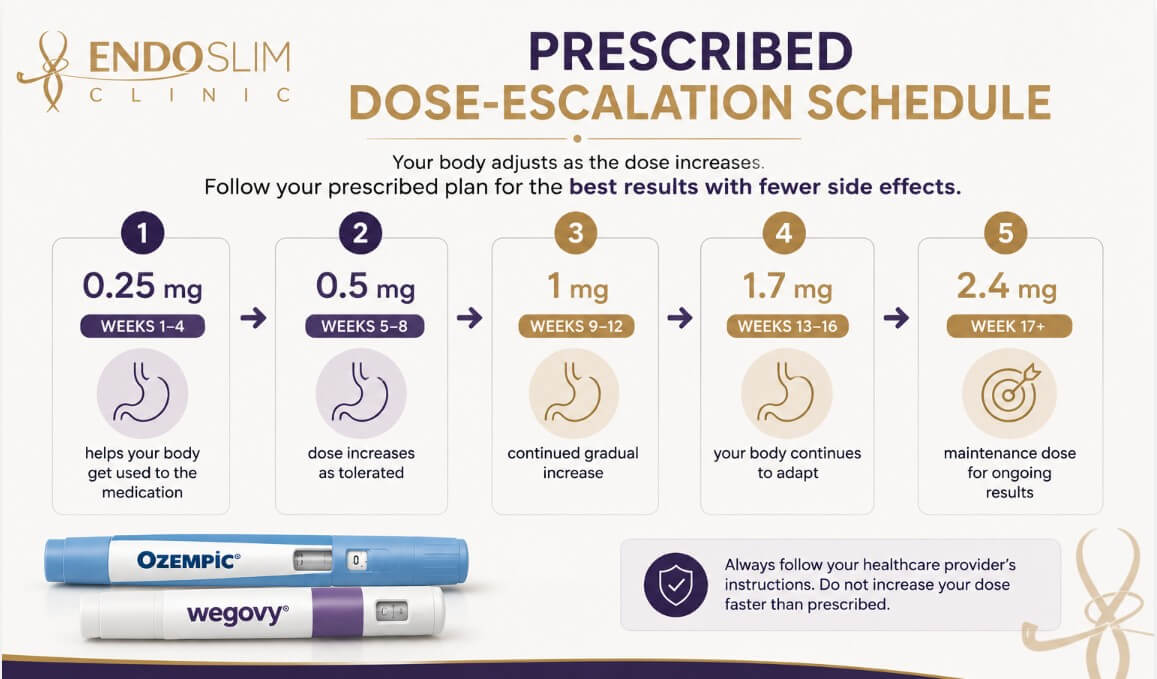
Follow the Prescribed Dose-Escalation Schedule
One of the most important ways to reduce gastrointestinal side effects is to follow the dose schedule prescribed by your healthcare provider. Starting at a lower dose gives the body time to adjust before treatment is increased.
Do not increase your dose early because weight loss feels slow, and do not take an additional dose to make up for a missed injection unless your healthcare provider or official medication instructions tell you to do so.
If a new dose causes significant symptoms, contact your prescriber. Depending on the situation, the physician may recommend remaining at the current dose longer, delaying an increase, reviewing other medications, or considering another approach.
Never change your semaglutide dose independently. Dose adjustments should be made by the healthcare professional prescribing and monitoring your medication.

1. Eat Smaller Meals
The most common mistake patients make while taking Ozempic® or Wegovy® is eating the same portion sizes they ate before starting treatment. Because semaglutide slows stomach emptying, large meals may increase nausea, bloating, fullness, reflux, or vomiting.
Rather than eating three large meals each day, many patients tolerate several smaller meals better. Eating slowly and stopping as soon as you feel comfortably full may also reduce digestive discomfort.
- Eat smaller portions.
- Chew food thoroughly.
- Eat slowly.
- Stop eating when you first feel comfortably full.
- Avoid eating until you feel overly full.
“Patients often tell me they still think with their old appetite. The medication changes how much food your stomach can comfortably hold, so portion size becomes extremely important.” — Dr. Shapsis
2. Stay Hydrated Throughout the Day
Vomiting, diarrhea, reduced appetite, and constipation may all increase the risk of dehydration. Drinking water consistently throughout the day may help support digestion and reduce constipation while helping replace fluids lost through gastrointestinal symptoms.
Instead of drinking large amounts all at once, many patients feel better taking frequent small sips throughout the day.
- Drink water regularly.
- Increase fluids during vomiting or diarrhea.
- Limit sugary beverages.
- Discuss electrolyte replacement with your healthcare provider if symptoms are severe.

3. Avoid High-Fat and Greasy Foods
Heavy meals may remain in the stomach longer while taking semaglutide, making nausea, bloating, indigestion, and reflux worse for some patients.
Many patients feel better when they choose lighter meals that are easier to digest.
- Limit fried foods.
- Avoid greasy takeout meals.
- Reduce very rich desserts.
- Choose lean protein whenever possible.
- Eat vegetables, fruit, and whole grains as tolerated.
If you’re currently receiving physician-guided treatment, learn more about our Ozempic® and Wegovy® weight-loss program.
4. Prioritize Protein Every Day
Because semaglutide reduces appetite, some patients unintentionally eat too little protein. Maintaining adequate protein intake helps support muscle mass during weight loss and may improve overall recovery and long-term results.
- Eggs
- Greek yogurt
- Fish
- Chicken
- Turkey
- Cottage cheese
- Protein shakes if recommended by your healthcare provider
“Protein becomes even more important when appetite decreases. We want patients losing fat—not muscle.” — Dr. Shapsis
5. Know When to Contact Your Doctor
Mild digestive symptoms are common, but certain symptoms should never be ignored.
- Persistent vomiting
- Severe abdominal pain
- Signs of dehydration
- Difficulty swallowing
- Shortness of breath
- Facial swelling or allergic reaction
- Symptoms that continue to worsen instead of improving
If you develop severe or persistent symptoms, contact your healthcare provider promptly rather than trying to manage them on your own.

What If Your Side Effects Don’t Improve?
Most digestive side effects gradually improve as your body adjusts to semaglutide. However, if symptoms remain severe, interfere with daily activities, or prevent you from eating and drinking normally, it’s important to contact your healthcare provider rather than simply stopping the medication.
Depending on your individual situation, your healthcare provider may recommend slowing dose escalation, temporarily remaining on the current dose, reviewing your eating habits, evaluating other medications, or discussing alternative physician-guided weight-loss options.
“Most side effects can be managed without stopping treatment. The key is identifying the cause early and adjusting the treatment plan when appropriate.” — Dr. Alexander Shapsis
What Happens If You Stop Ozempic®?
Some patients eventually decide to discontinue Ozempic® or Wegovy®. If you’re considering stopping treatment because of side effects, don’t make that decision alone. Your healthcare provider can discuss strategies to improve tolerability, adjust your treatment plan, or recommend another option if appropriate.
To learn what patients commonly experience after discontinuing semaglutide, read our physician guide:
What Happens When You Stop Taking Ozempic?

Looking for an Alternative to Ozempic® or Wegovy®?
If side effects remain difficult to tolerate or semaglutide is no longer the right option, there may be other physician-guided weight-loss treatments available. One option for selected patients is the Allurion Smart Capsule, a swallowable gastric balloon that does not require surgery, endoscopy, or anesthesia.
Learn more:
Alternative to Ozempic® & Wegovy®: Is the Allurion Smart Capsule Right for You?
Frequently Asked Questions
How long do Ozempic® and Wegovy® side effects usually last?
Many digestive symptoms improve during the first several weeks as the body adjusts to treatment, although every patient’s experience is different.
Should I stop taking Ozempic® if I feel nauseous?
Not necessarily. Mild nausea is common during dose escalation. Speak with your healthcare provider before stopping or changing your medication.
Can eating smaller meals help?
Yes. Many patients find that eating smaller meals, chewing slowly, and stopping when comfortably full helps reduce nausea and stomach discomfort.
What foods should I avoid?
Many patients tolerate treatment better when they limit greasy foods, fried meals, large portions, and very rich desserts.
Can I switch to another treatment?
Depending on your medical history and treatment goals, your physician may discuss alternative weight-loss options if semaglutide is not well tolerated.

Successful weight loss isn’t just about taking medication.
Healthy eating habits, hydration, movement, and physician-guided care all play an important role in reducing side effects and achieving long-term results.
If you’re considering semaglutide treatment or have questions about managing side effects, learn more about our Ozempic® & Wegovy® weight-loss program in Brooklyn. If you’re interested in oral semaglutide, you can also explore our guide to Wegovy® weight-loss tablets.

Medical Disclaimer
This article is provided for educational purposes only and should not be considered medical advice. Ozempic® and Wegovy® may not be appropriate for every patient. Never start, stop, or adjust semaglutide treatment without guidance from a qualified healthcare provider. Individual results and side effects vary.


-
Mon-Friday: 08:30 - 6:00Saturday: ClosedSaturday: Closed