
Category: Uncategorized
“Bad News for Your Scale”: How Modern Weight Loss Is Changing Patient Care in New York

“Bad news for your scale… we’re on the way.” It is a lighthearted message, but it reflects a serious change in how obesity and excess weight are treated today.
For many patients, weight loss is no longer limited to repeating the same advice to eat less and exercise more. Modern care can include prescription medications, endoscopic procedures, swallowable gastric balloons, nutrition support, and physician follow-up.
At EndoSlim Clinic NY in Brooklyn, Dr. Alexander Shapsis works with patients to determine which approach—or combination of approaches—fits their medical history, previous treatment experience, preferences, and goals.
Board-Certified Gastroenterologist • Founder of EndoSlim Clinic NY
Quick Answer
Modern medical weight loss can address more than calories alone. Depending on the patient, treatment may involve appetite-regulating medication, temporary gastric-balloon therapy, endoscopic stomach-volume reduction, nutrition changes, or a combination strategy. The goal is to match treatment to the individual rather than force every patient into the same program.
Why Weight Loss Is No Longer One-Size-Fits-All
Two patients can have the same BMI and still need very different treatment plans. Hunger, metabolic health, previous weight-loss attempts, medications, eating patterns, gastrointestinal history, and personal preferences can all affect which approach makes sense.
EndoSlim Clinic NY offers several non-surgical and endoscopic pathways rather than relying on one treatment for every patient.
Endoscopic Sleeve Gastroplasty: Stomach Reduction Without Traditional Surgery
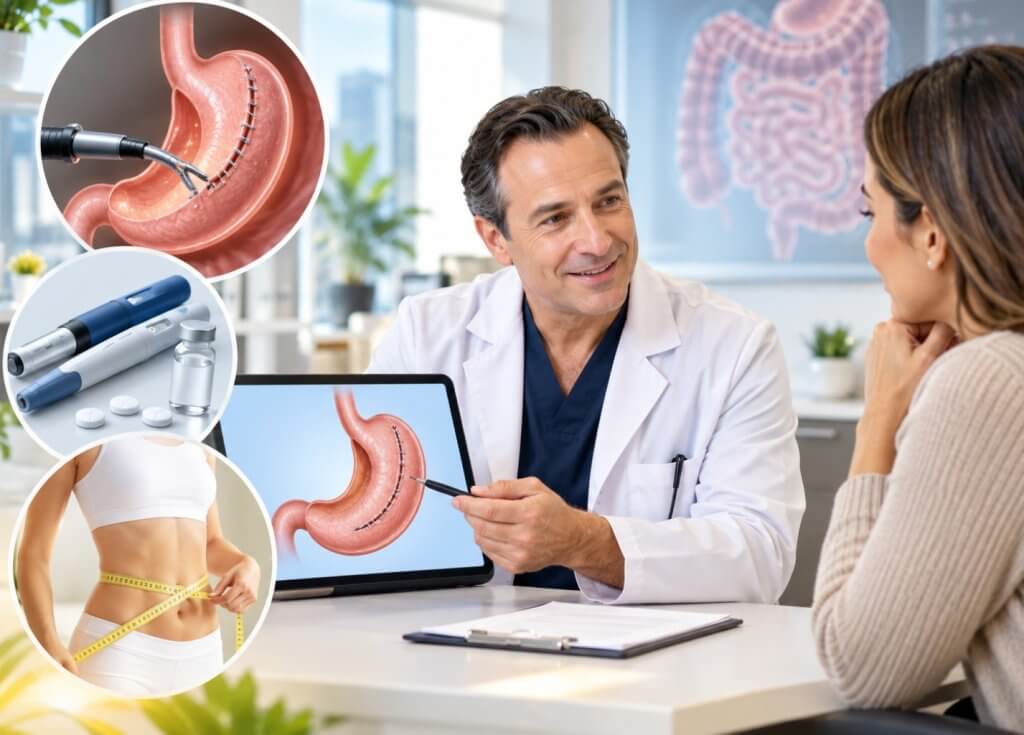
Endoscopic Sleeve Gastroplasty (ESG) uses an endoscope passed through the mouth and internal sutures to reshape the stomach. No abdominal incisions are made and no stomach tissue is surgically removed.
For selected patients, ESG provides a procedure-based approach designed to support smaller portions and earlier fullness.
How ESG Works Without Traditional Weight-Loss Surgery
In this video, Dr. Alexander Shapsis discusses ESG and the endoscopic approach used to reduce functional stomach volume without abdominal incisions or surgical removal of stomach tissue.
ESG may be considered for eligible patients looking for a procedure-based alternative to traditional bariatric surgery.
Explore Endoscopic Sleeve GastroplastyAllurion® Smart Capsule: A Swallowable Gastric Balloon
The Allurion® Smart Capsule is a swallowable gastric balloon designed to provide temporary support with satiety and portion control. Standard placement does not require traditional surgery or endoscopic placement.
This may appeal to eligible patients looking for a temporary gastric-balloon approach.
Semaglutide and Tirzepatide: Medical Weight-Loss Treatment
Prescription medications can address biological pathways involved in appetite and satiety. EndoSlim Clinic NY offers physician-supervised semaglutide care, including Ozempic® and Wegovy®, as well as tirzepatide care, including Mounjaro® and Zepbound®.
Patients comparing the two can also read our Ozempic® vs Zepbound® weight-loss comparison.
What If Medication Alone Is Not Enough?
Medical weight loss does not have to be framed as medication versus a procedure forever. One patient may begin with medication and later consider ESG. Another may undergo ESG and later use medication when clinically appropriate.
The more useful question is often not “Which treatment is best?” but “Which treatment makes sense for this patient at this stage?”
Learn more in ESG vs Ozempic® and our guide to weight regain after bariatric procedures.
Four Weight-Loss Pathways Patients Can Discuss
The Goal Is Not Simply to Make the Scale Move
A lower number on the scale can be meaningful, but sustainable obesity care also considers nutrition, muscle preservation, metabolic health, side effects, treatment burden, and the patient’s ability to maintain changes over time.
That is why treatment at EndoSlim Clinic NY begins with understanding the patient rather than automatically choosing the newest medication or procedure.
See Weight-Loss Results and Patient Experiences
Patients considering medical or endoscopic weight loss often want to see how different treatment pathways work in real life. Explore EndoSlim Clinic NY Before & After results and patient stories. Individual results vary.
Explore More Weight-Loss Procedures & Treatments
Ready to Talk About Your Weight-Loss Options?
EndoSlim Clinic NY is located at 2797 Ocean Pkwy, Suite 1, Brooklyn, NY 11235. Dr. Shapsis sees patients from Brooklyn, Manhattan, Queens, the Bronx, Staten Island, Long Island, New Jersey, and Connecticut.





-
Mon-Friday: 08:30 - 6:00Saturday: ClosedSaturday: Closed
Can You Take GLP-1 Medications After ESG? Semaglutide & Tirzepatide Explained

Can You Take GLP-1 Medications After ESG?
Patients often ask whether Endoscopic Sleeve Gastroplasty means they will never need weight-loss medication again—or whether medications such as Wegovy®, Ozempic®, Zepbound®, or Mounjaro® should automatically be added after ESG.
The answer is more individualized. ESG and GLP-1-based medications address different parts of weight management. ESG changes functional stomach volume and supports smaller portions, while medications such as semaglutide and tirzepatide influence biological pathways involved in hunger and satiety.
Some patients progress well after ESG without medication. Others may later benefit from medical therapy because of persistent hunger, a prolonged plateau, less-than-expected weight loss, or weight regain. The goal is not to use the most treatments—it is to determine which treatment is appropriate at each stage.
Why Would Someone Need Medication After ESG?
ESG Works on Anatomy. Medication Works on Biology.
During Endoscopic Sleeve Gastroplasty (ESG), internal sutures reshape the stomach without abdominal incisions or surgical removal of stomach tissue. The goal is to help patients feel satisfied with smaller portions.
Weight-loss medications work through a different mechanism. Semaglutide is a GLP-1 receptor agonist, while tirzepatide activates both GIP and GLP-1 receptors.
This is why the treatments may sometimes complement each other: one changes stomach capacity, while the other can influence hunger and fullness.
ESG
Procedure-based treatment that reduces functional stomach volume and supports smaller meals without removing stomach tissue.
GLP-1 / GIP-GLP-1 Medication
Prescription treatment that influences appetite, satiety, food intake, and related metabolic pathways while therapy continues.
5 Reasons Medication May Be Discussed After ESG
1. Less Weight Loss Than Expected
If progress remains below the individualized treatment goal despite appropriate follow-up, the plan may need reassessment.
2. Persistent Hunger
Some patients still experience substantial appetite even when smaller meals are physically easier after ESG.
3. A Prolonged Plateau
A short plateau is common. A longer stall may lead the care team to review nutrition, activity, anatomy, and medication options.
4. Weight Regain
When weight returns later, the cause should be evaluated before choosing medication, endoscopic revision, or another approach.
5. Previous Medication Response
A patient who previously responded well to a GLP-1 medication may be considered for future medical therapy if clinically appropriate.
Should Wegovy® or Zepbound® Start Immediately After ESG?
Not Automatically
Starting medication immediately after ESG may make sense for some patients, but it should not be treated as a routine requirement. If ESG alone is producing steady progress, adding another treatment may increase cost, side effects, and treatment burden without a clear need.
For another patient with significant appetite, metabolic disease, or a history of inadequate response to procedure-only treatment, combination therapy may be considered earlier.
The broader evidence is discussed in our article ESG vs Ozempic: Own Your Weight Loss or Rent It?.
Why the Early Post-ESG Period Needs Extra Care
ESG and GLP-1 Medications Can Both Affect the GI Tract
After ESG, temporary nausea, abdominal pressure, reflux, or changes in food tolerance can occur during recovery. GLP-1-based medications can also cause gastrointestinal side effects such as nausea, vomiting, constipation, diarrhea, or abdominal discomfort.
That is why medication timing matters. The care team needs to distinguish expected post-procedure recovery symptoms from medication-related effects.
See our ESG recovery and weight-loss timeline and what actually happens after ESG.
Does ESG Plus Medication Always Work Better?
The Evidence Is More Nuanced Than “More Is Better”
A 2026 systematic review comparing ESG alone with ESG plus anti-obesity medication found a modest early average weight-loss advantage for combination treatment, but the difference was not statistically significant and consistent long-term superiority was not established.
You can also compare the leading medication approaches in Ozempic® vs Zepbound® for weight loss.
Can Medication Help if Weight Returns After ESG?
Possibly—but First Find Out Why the Weight Returned
Weight regain can involve appetite, metabolic adaptation, eating patterns, medications, sleep, physical activity, or anatomical changes. A prescription alone may not address the real cause.
If anatomy remains effective but hunger has increased, medication may be reasonable. If anatomy has changed, another endoscopic strategy may be more appropriate. If nutrition or another medical factor is driving regain, that may need to be addressed first.
Read more about weight regain after bariatric procedures.
You Do Not Have to Choose Only One Treatment Forever
Obesity Treatment Can Change Over Time
A patient’s treatment path may look like:
Medication → ESG → no medication
ESG → plateau → medication
Medication → inadequate durability → ESG
ESG + medication for selected patients.
The sequence should follow the patient’s health, goals, response, and tolerance—not a predetermined formula.
Learn More About ESG and Weight-Loss Medications
Considering GLP-1 Medication Before or After ESG?
At EndoSlim Clinic NY in Brooklyn, Dr. Alexander Shapsis can review your BMI, medical history, prior treatment, hunger patterns, medication tolerance, weight-loss progress, and goals to determine whether ESG, medication, or a combination strategy may be appropriate.
Serving: Brooklyn, Manhattan, Queens, the Bronx, Staten Island, Long Island, New Jersey, and Connecticut.
ESG and Weight Loss Medications: 7 Things Your Gastroenterologist Wants You to Know
Seven Things Your Gastroenterologist Wants You to Know About Weight Loss Medications and ESG
Weight-loss treatment does not follow one universal formula. The most effective plan should respect your medical history, goals, preferences, tolerance, and response to treatment.
A 2026 systematic review compared Endoscopic Sleeve Gastroplasty (ESG) alone with ESG plus anti-obesity medication. The findings are useful for patients deciding between a procedure, medication, or a combination approach.
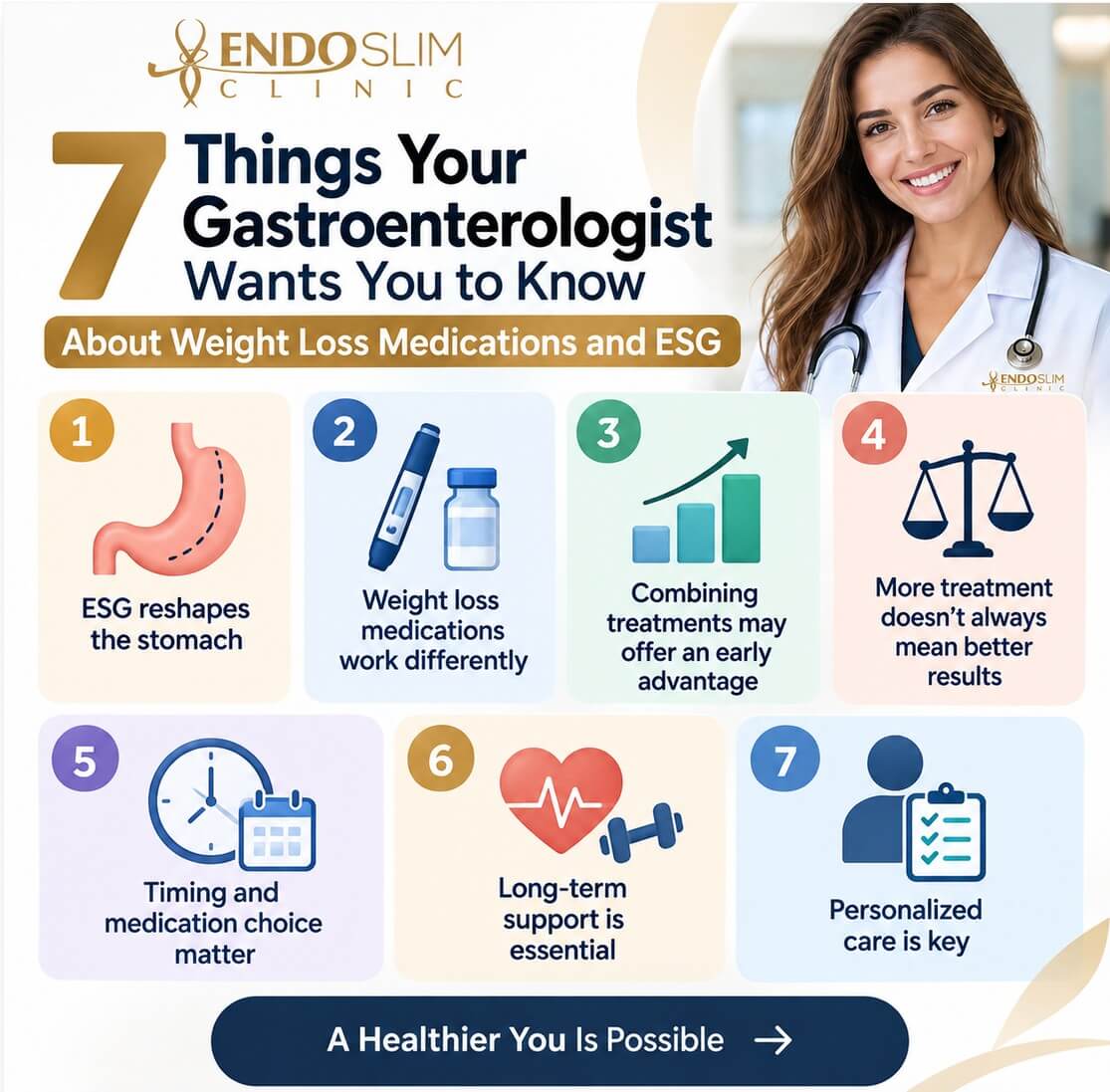
1. ESG Reshapes the Stomach Without Traditional Surgery
During Endoscopic Sleeve Gastroplasty (ESG), a gastroenterologist passes an endoscope through the mouth and places sutures inside the stomach. This creates a smaller, tube-like shape that can support earlier fullness and smaller portions.
There are no abdominal incisions, and unlike surgical sleeve gastrectomy, no part of the stomach is removed. ESG is still a medical procedure, so preparation, recovery guidance, diet progression, and follow-up matter.
2. Weight-Loss Medications Work Through Different Pathways
Anti-obesity medications can influence appetite, satiety, food intake, or related metabolic pathways. The review included several medications, including semaglutide, liraglutide, tirzepatide, topiramate, and others.
That means “ESG plus medication” does not describe one identical treatment plan. Different drugs, doses, timing, and patient populations can produce different outcomes.
Learn more about semaglutide treatment and tirzepatide treatment.
3. Combining ESG With Medication Showed a Possible Early Advantage
Across 10 studies involving 578 participants, patients receiving ESG plus anti-obesity medication showed an average advantage of about 1.9 percentage points in total weight loss at approximately seven months.
4. More Treatment Does Not Automatically Mean Better Treatment
The review found no consistent long-term weight-loss advantage for ESG plus medication over ESG alone. It also found no meaningful overall HbA1c improvement from adding medication to ESG compared with ESG alone.
A well-matched plan matters more than simply adding another therapy. Cost, side effects, medication tolerance, treatment burden, and the patient’s goals all matter.
5. Timing and Medication Choice Shape the Experience
Some patients start medication around the time of ESG. Others add it later when weight loss slows, hunger increases, or weight regain develops.
These differences in timing and medication choice contributed to variation across the studies. Your gastroenterologist should evaluate prior weight-loss attempts, metabolic health, appetite patterns, medication response, and goals before deciding when medication fits.
6. Long-Term Support Still Matters With Every Option
ESG and medication are tools within comprehensive obesity care. Neither replaces nutrition, movement, sleep, muscle preservation, behavior change, or ongoing medical monitoring.
Regular follow-up helps identify plateaus, side effects, or weight regain early—before those issues become harder to address.
7. Personalized Care Is the Most Important Lesson
The researchers concluded that combination treatment deserves selective use rather than routine use for everyone. The evidence base also had limitations, including variation among studies and relatively limited full-text data.
The practical lesson is simple: the newest or most intensive treatment is not automatically the best one for every patient.
ESG Alone vs ESG + Medication
| Finding | 2026 Review |
|---|---|
| Studies included | 10 |
| Total participants | 578 |
| Approximate comparison point | About 7 months |
| ESG + medication advantage | About +1.9% total body weight loss |
| Statistically significant? | No |
| HbA1c difference | No meaningful overall advantage |
| Clear long-term superiority? | Not established |
Personalized Weight Loss With Dr. Alexander Shapsis
Medication, ESG, gastric balloons, and combination treatment are different tools. Dr. Shapsis evaluates medical history, BMI, previous treatment, appetite, medication tolerance, weight-loss goals, and long-term maintenance before recommending an approach.
Learn more about Dr. Alexander Shapsis and EndoSlim Clinic NY.
Continue Learning About ESG and Medical Weight Loss
Medication, ESG, or Both?
At EndoSlim Clinic NY in Brooklyn, Dr. Alexander Shapsis can review your BMI, medical history, previous treatment, appetite patterns, medication tolerance, and goals to help determine which strategy may fit you best.
Serving: Brooklyn, Manhattan, Queens, the Bronx, Staten Island, Long Island, New Jersey, and Connecticut.